




Journals
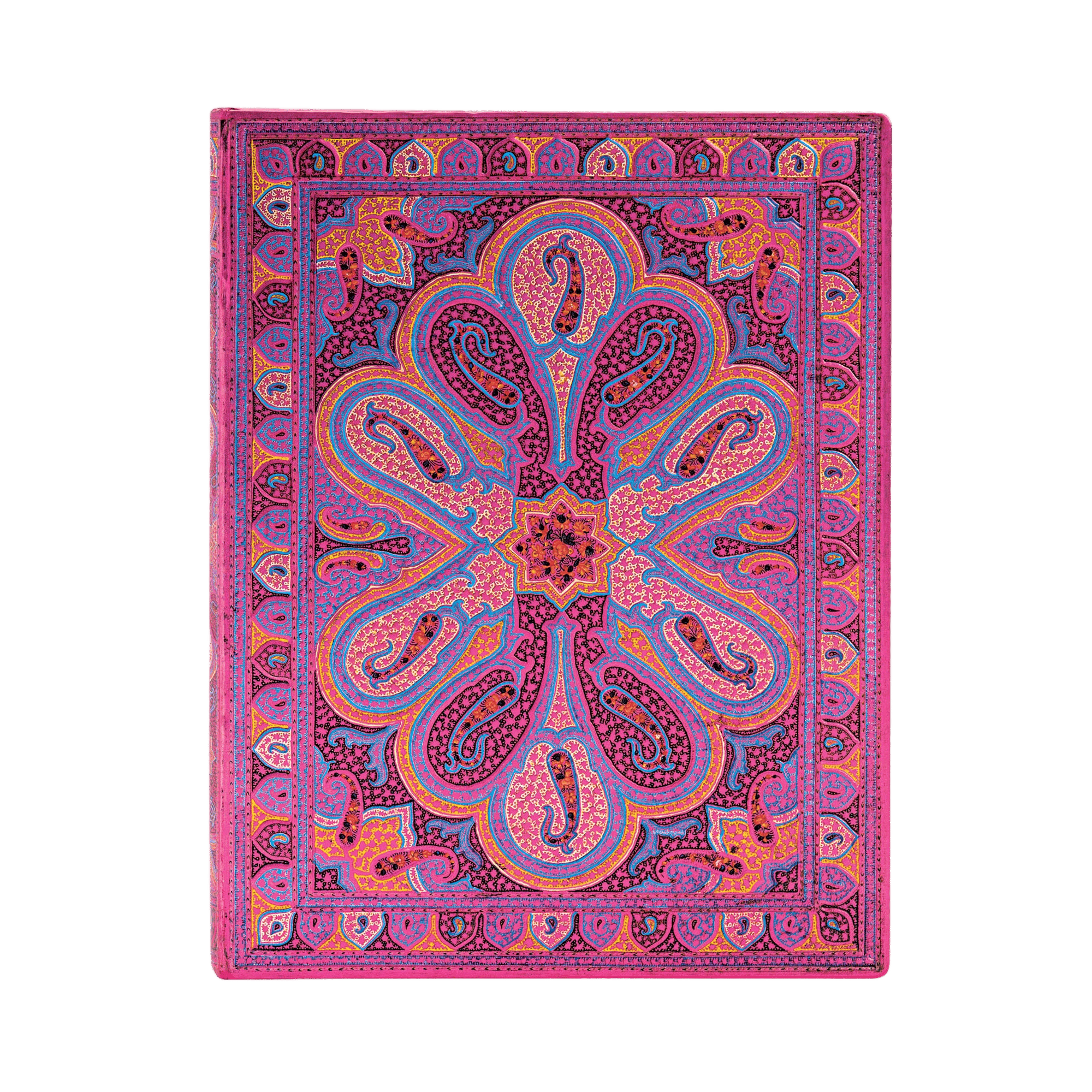
Adina
Bukhara
Item no. 9781439731451
- Interior: Lined
- Closure: Elastic Band
- GSM (paper weight): 120 gsm
- Edge Printing: No
- Pouch Type: Memento Pouch
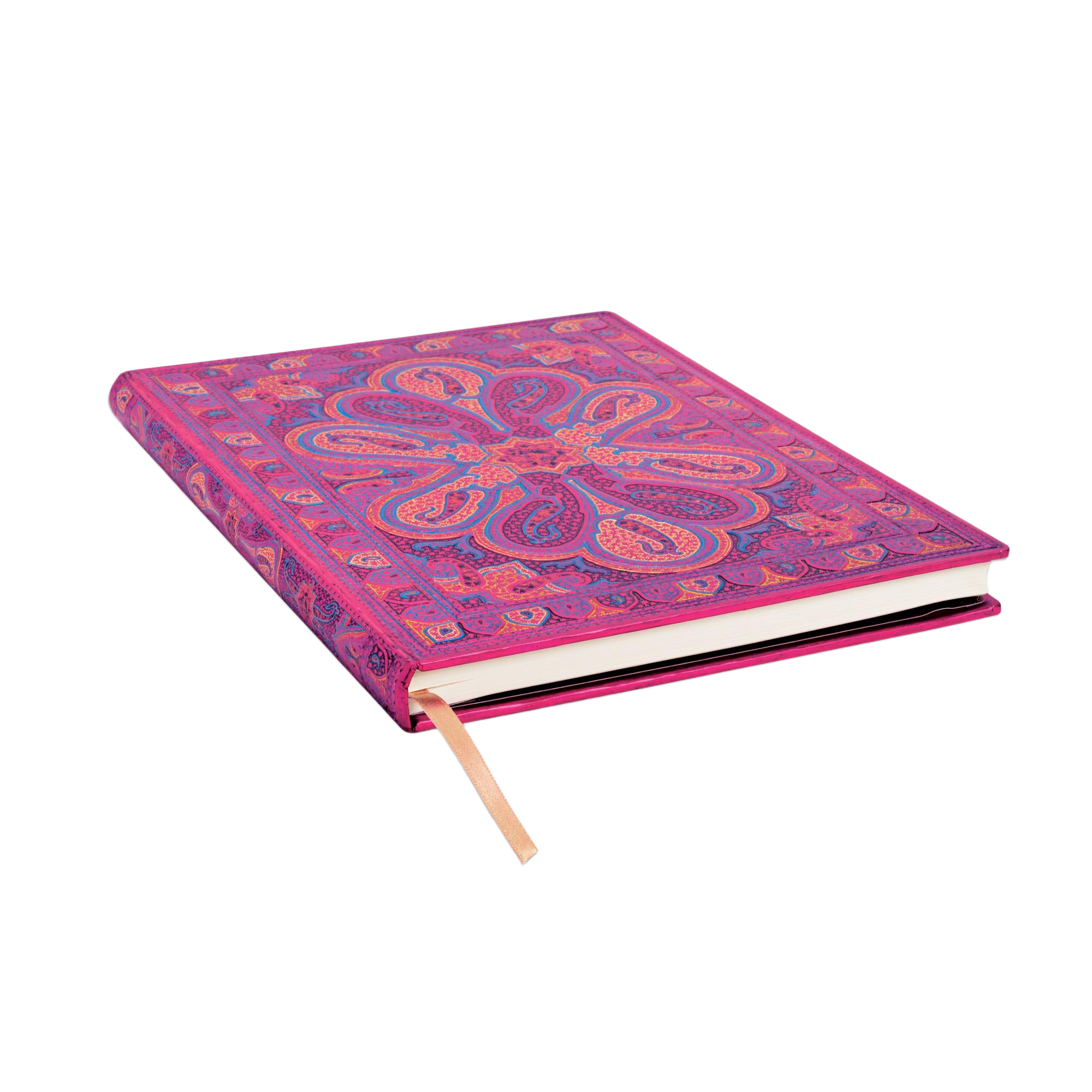
- Satin ribbon marker
- 100% recycled binder boards
- Decorative printed cover paper
- Endpaper with credit and copyright information as well as historical background for the original artwork
- Threaded stitching and glue, as needed
- Acid-free paper
- Memento pouch
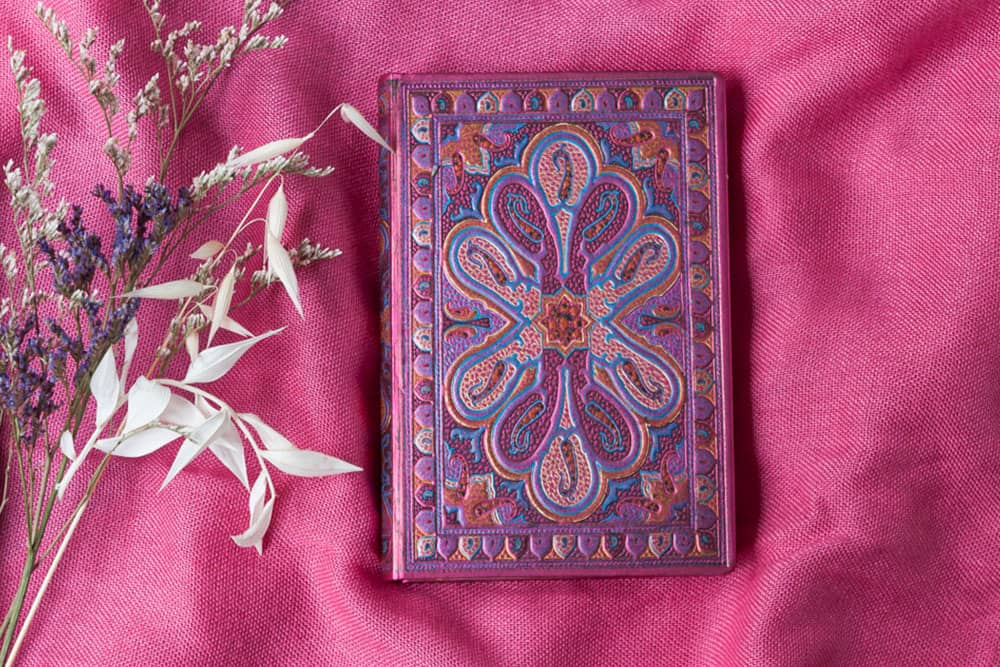
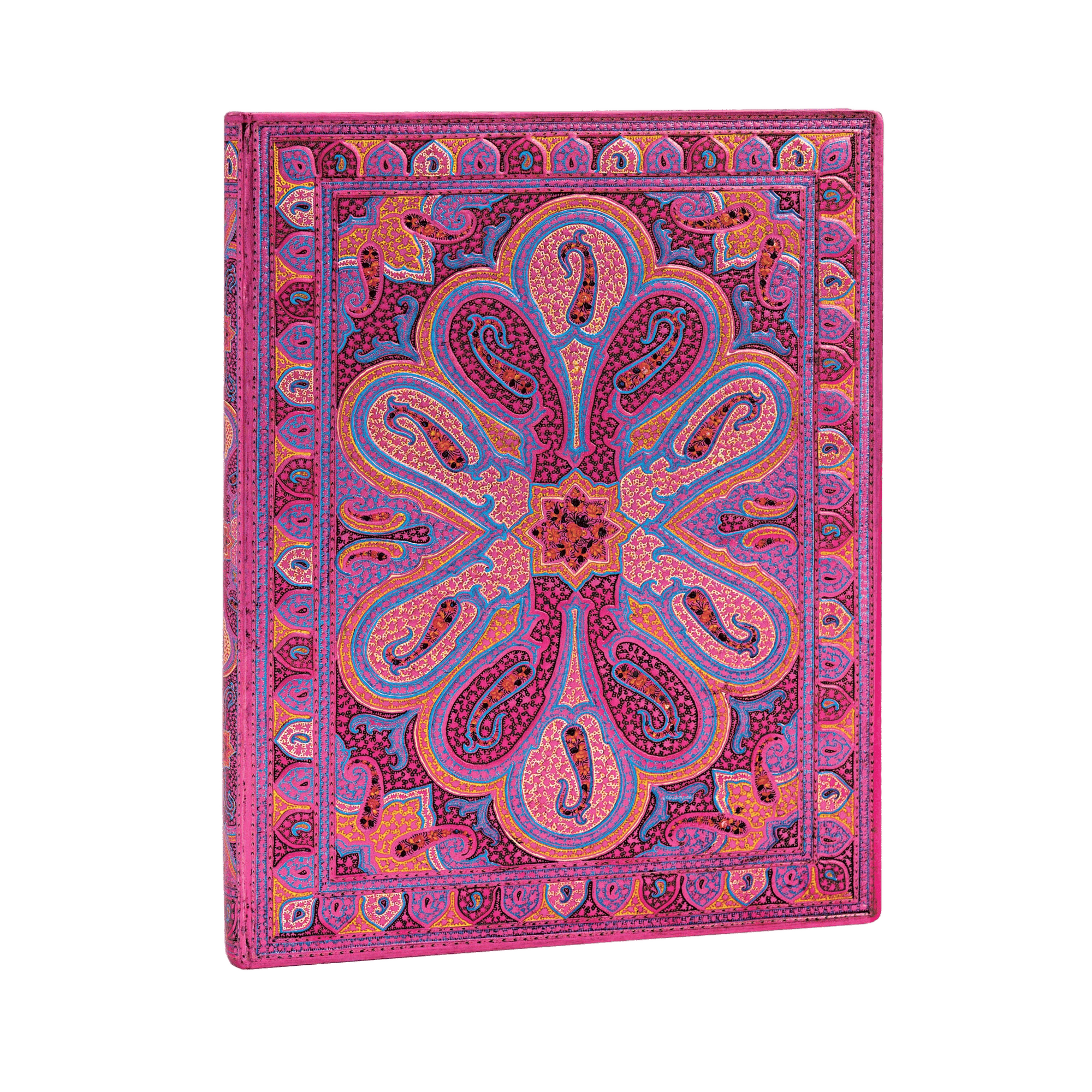
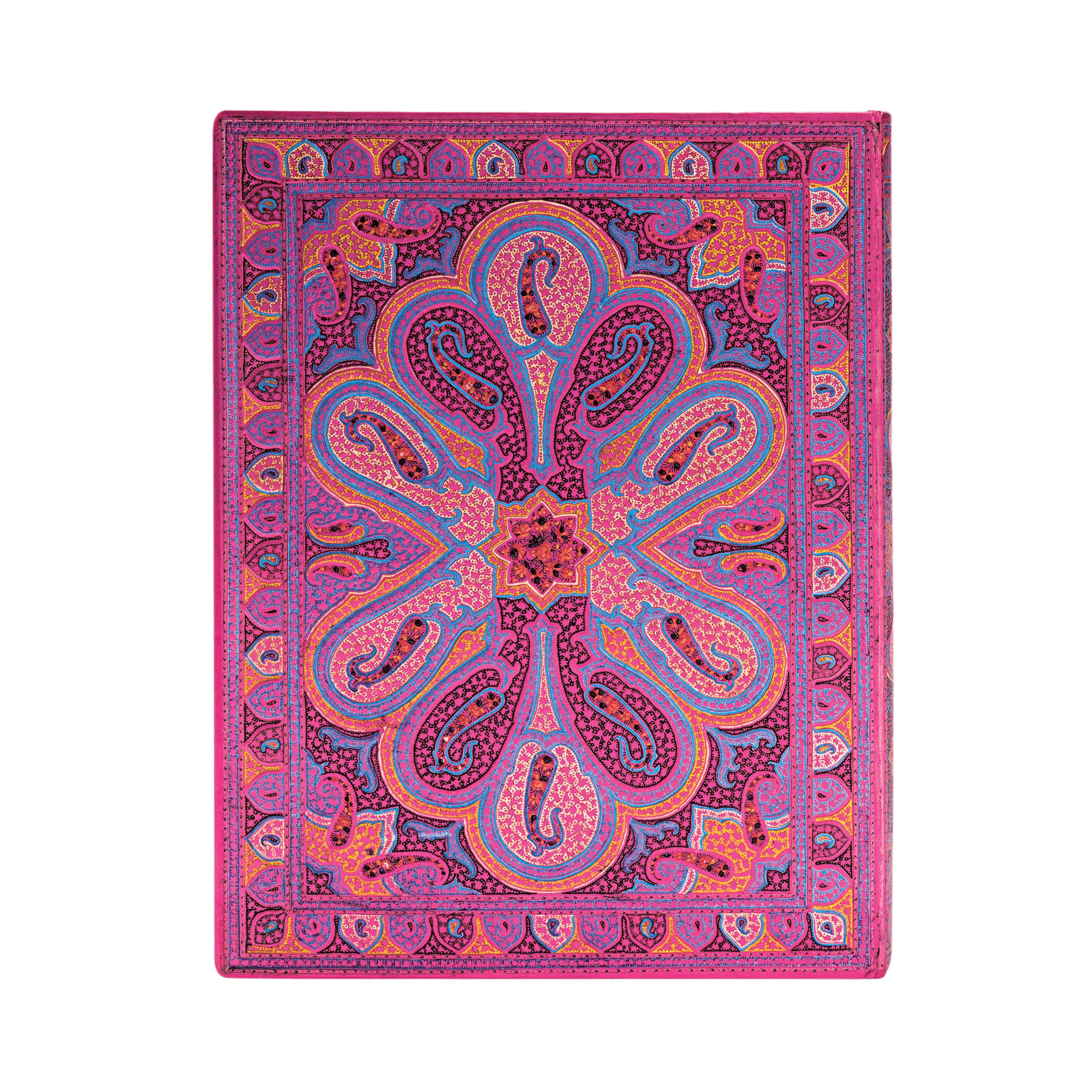
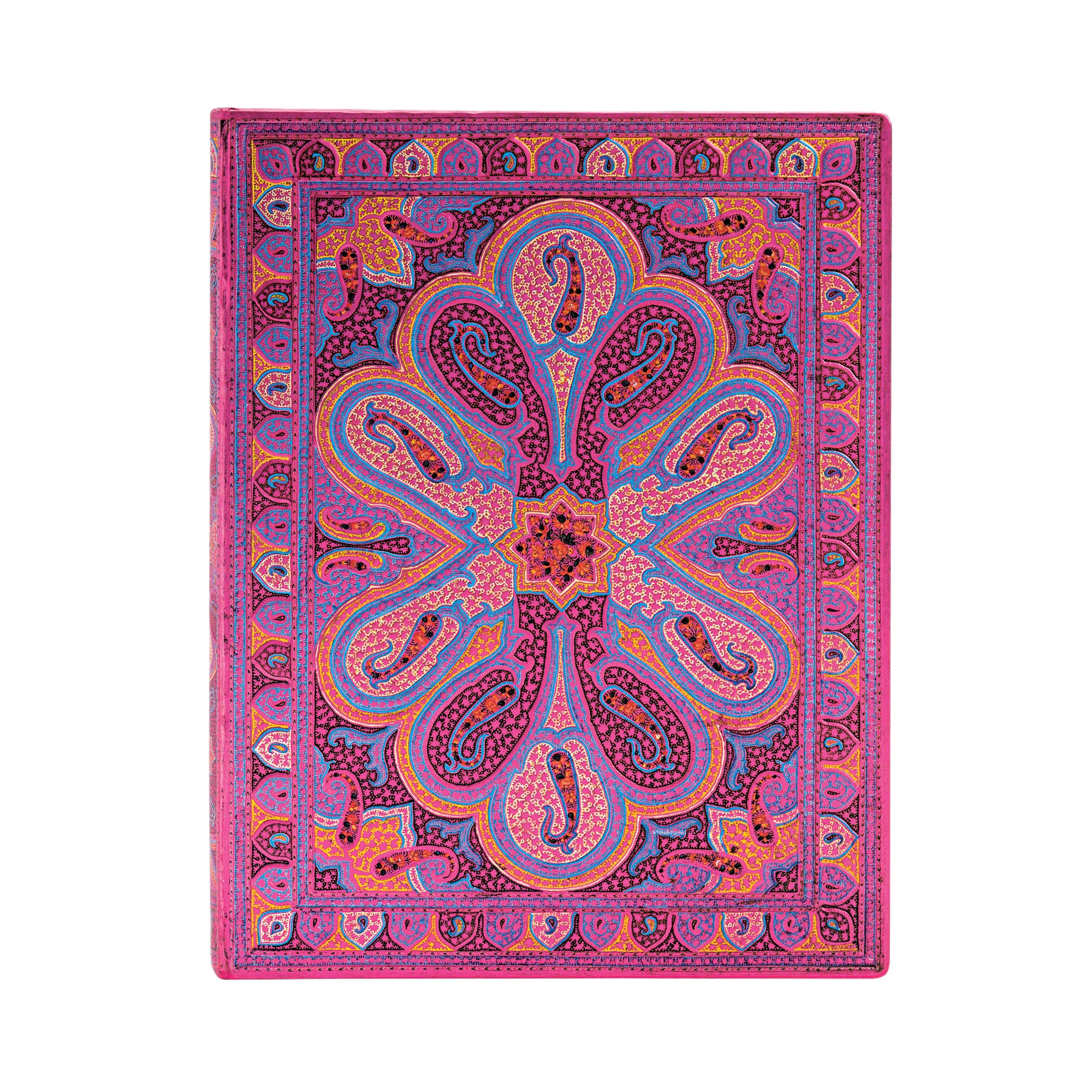
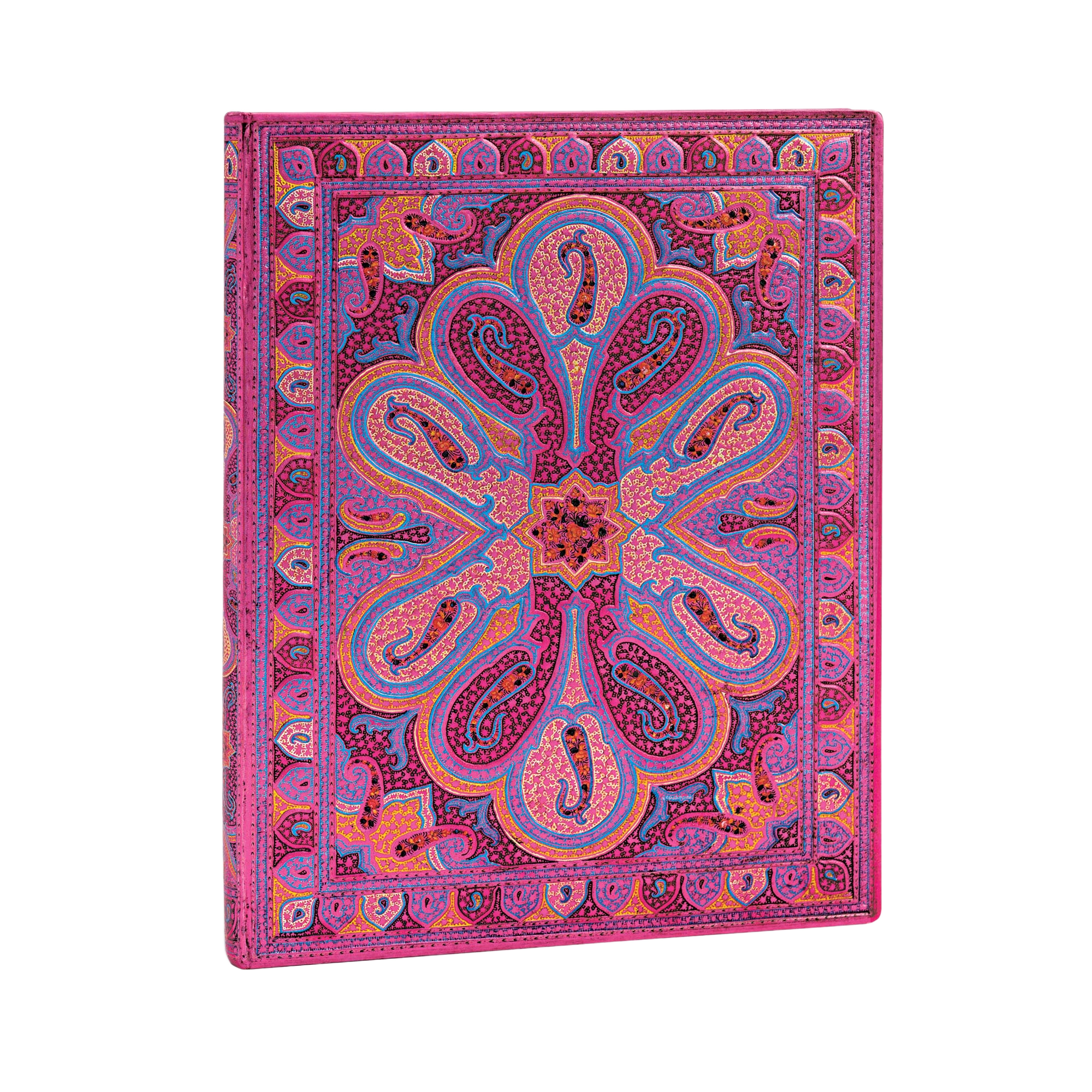
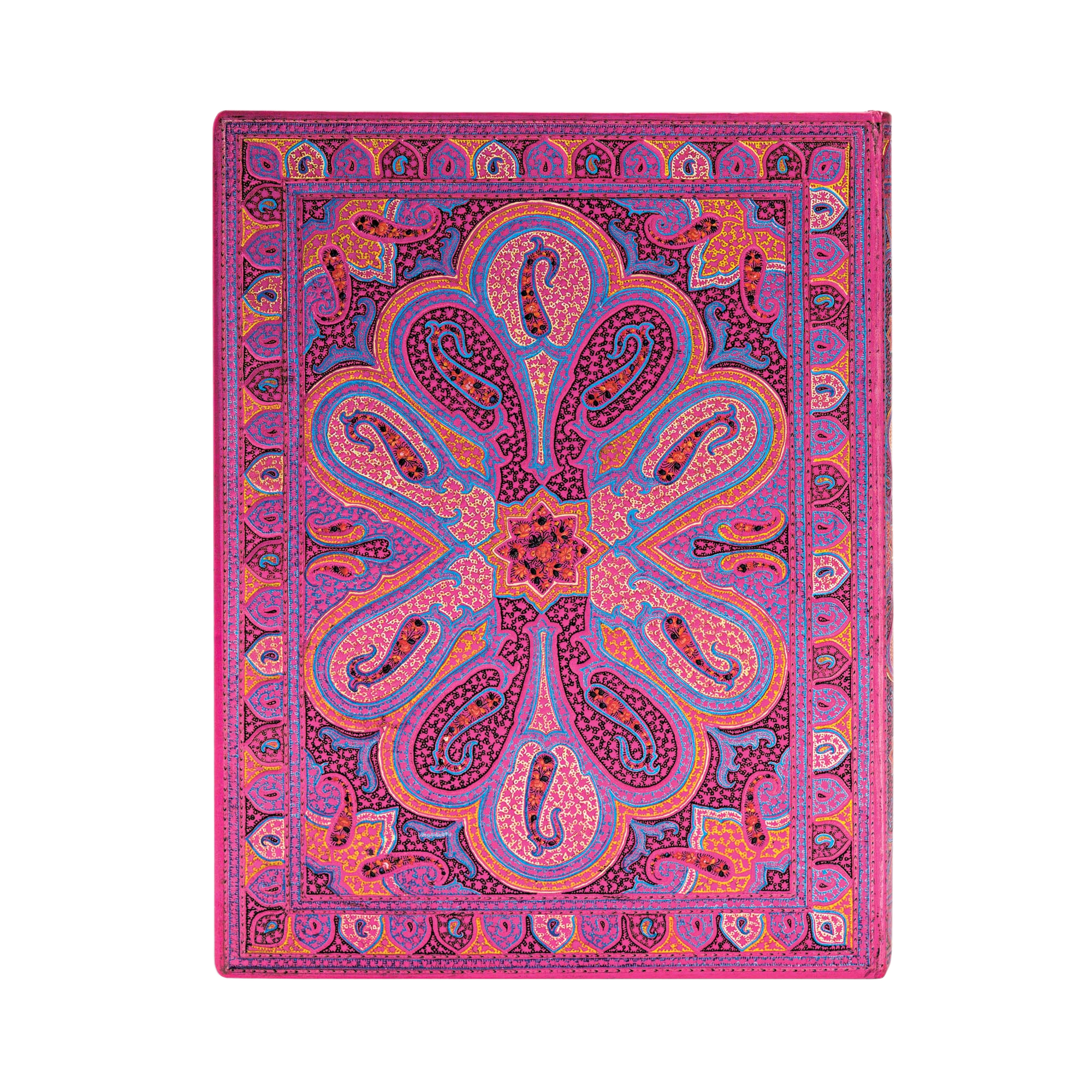
Our reproduction of an 18th-century Persian book cover celebrates the radiance of Bukhara (in modern-day Uzbekistan), a city rich in culture located along the Silk Road. Indo-Persian influences abound in the art and architecture produced by the people of Bukhara, and the rich and colourful lacquer design of this binding highlights these artistic histories.
For our Spring 2015 collection we were inspired by the colours of a glittering magenta sunrise and used them to transform our golden Bukhara design. Adina, meaning “delicate, slender, refined or gentle,” seems an appropriately feminine name for this dazzling new cover.
This magnificent binding was once owned by the German archaeologist and art historian Franz Johann Joseph Bock (1823–1899). It should come as no surprise that this renowned silk producer and publisher of many books on art and antiquities would desire to own such a piece. The detail that went into this design, from the margins of heart-shaped leaves to lacquer painted in light blue and golden bronze, highlights the best of the Golden Age of the Samanids, by which the artists of Bukhara were so inspired.
Need Help?
In case of any questions, check out our FAQs here. If you still can't find your answer, you can contact us at the link below.
Contact Us