Tote Bags
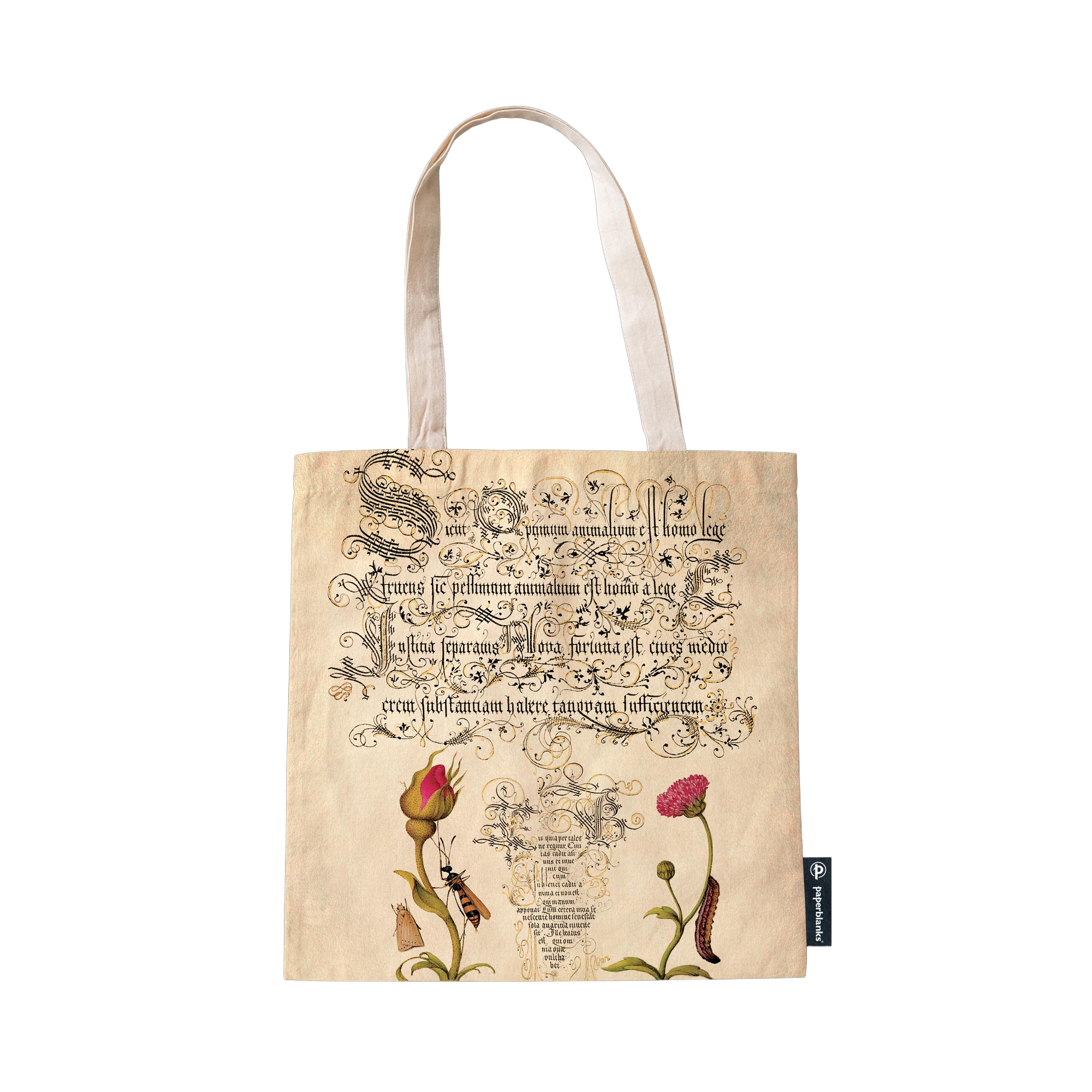
Flemish Rose
Mira Botanica
9781439781524
- Size: 380 × 380 × 90 mm
- Material: Cotton
- Inner zipper pocket size: 220 × 155 mm
- Strap Colour: Cream
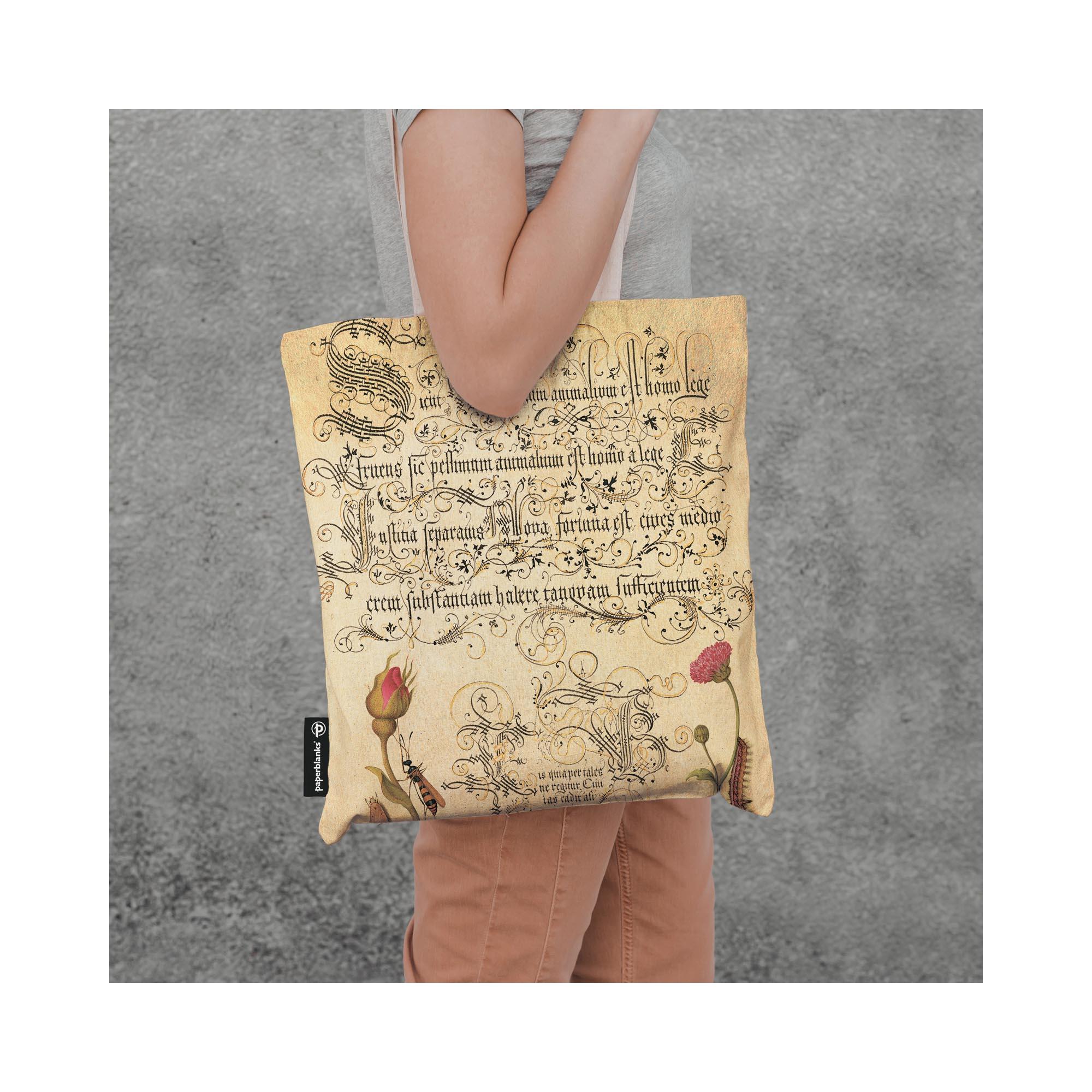
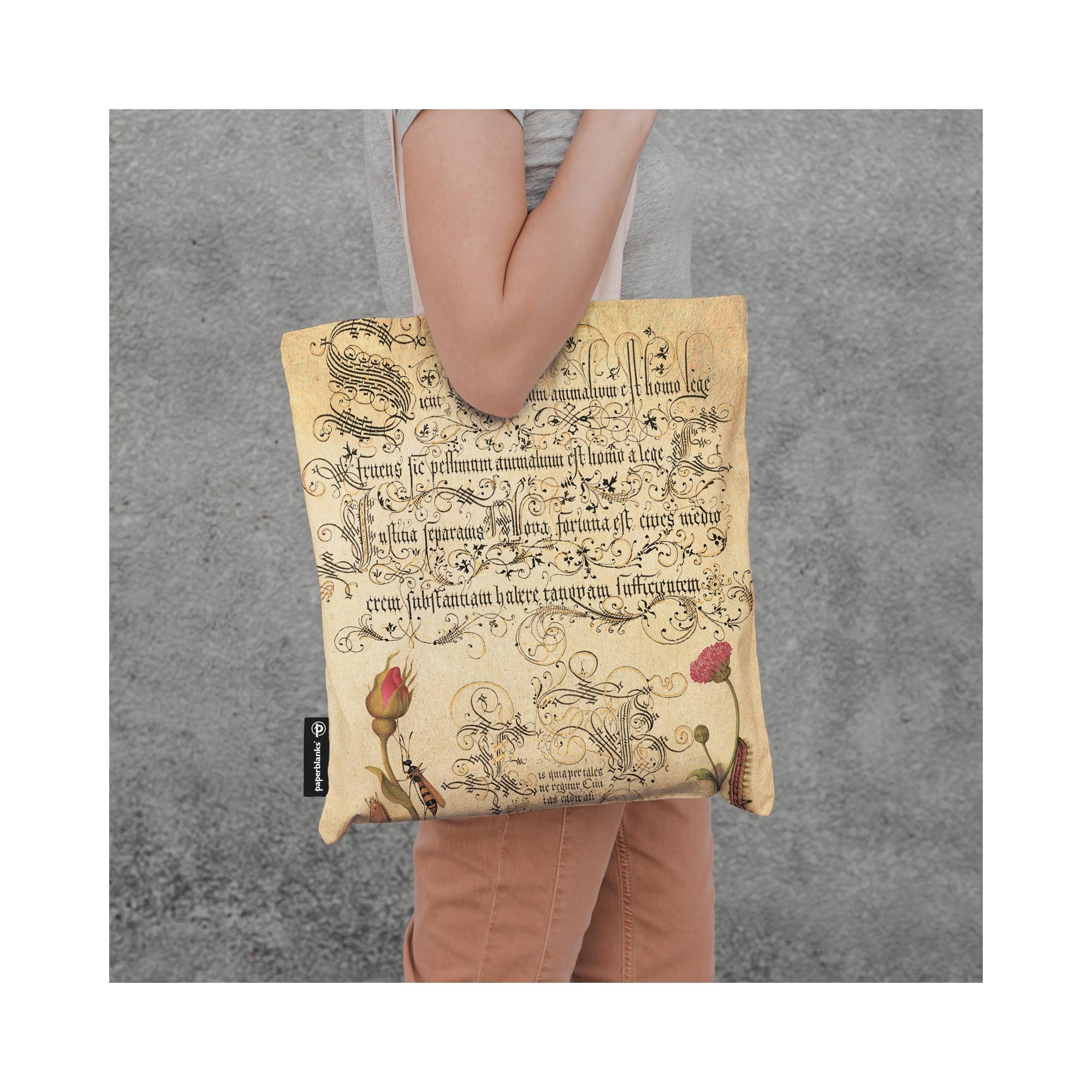
- Holds up to 7 kilograms (approximately 15.5 lbs)
- Durable strap for carrying the bag over one's shoulder
- Branded Paperblanks tag
- Artwork credit printed on inside of the bag
- Garment Tolerance Note
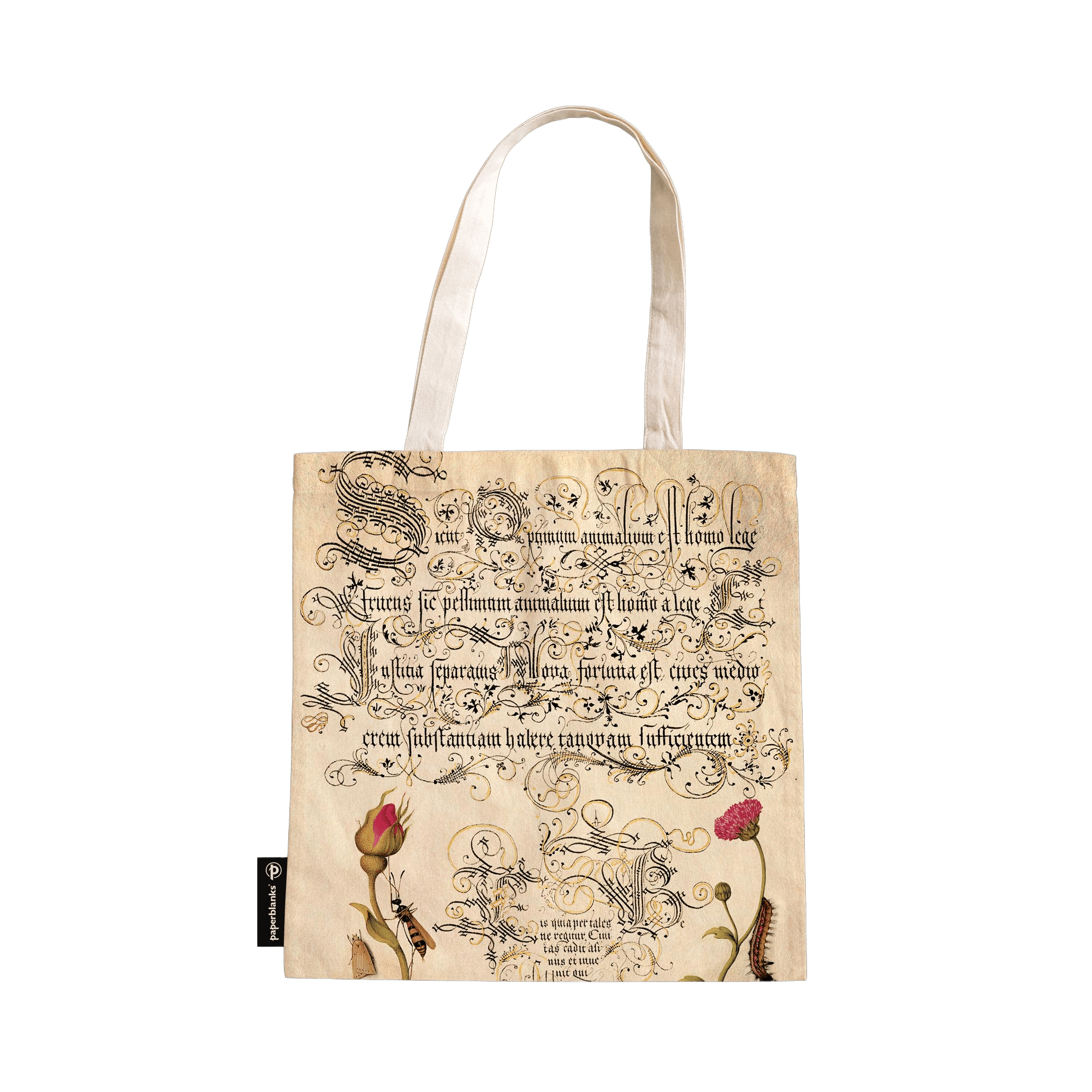
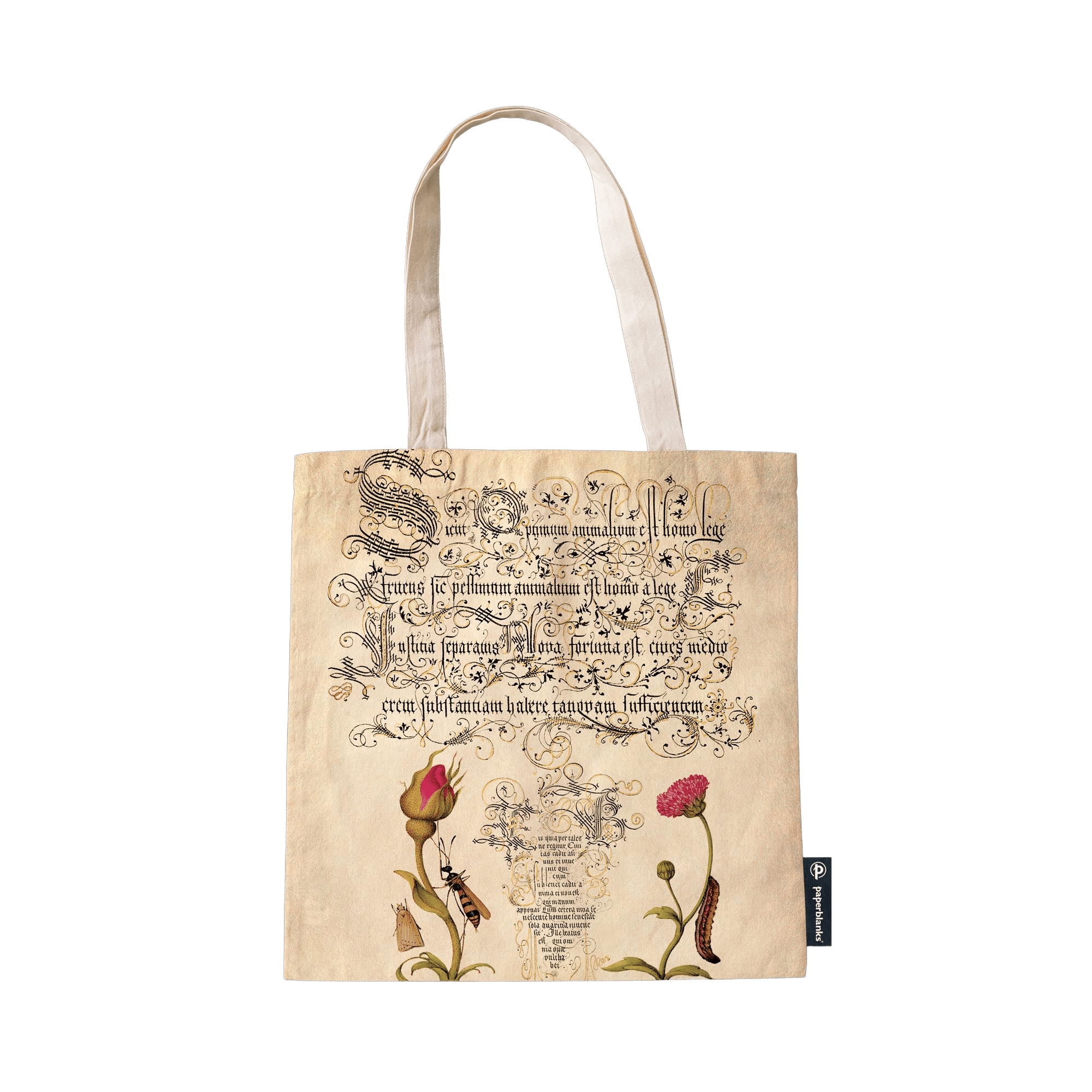
The art of still life painting is a celebrated part of Dutch culture and a technique for which its artists are among the most prized. But this captivating and time-honoured artistic style didn’t emerge fully formed. Before these artists came to be so celebrated, there were illustrators who delicately illuminated handwritten manuscripts with images of plants, fruits, flowers, animals and insects to add emotional power to a written work.
One of the most renowned practitioners of this style of illumination was Joris Hoefnagel (1542–1601). In the 1590s the Emperor Rudolf II commissioned Hoefnagel to add his illuminations, meant to represent a survey of the natural world, to the Mira calligraphiae monumenta. The book was a mid-16th-century manuscript on the art of calligraphy by Georg Bocskay, imperial secretary to the Holy Roman Emperor Ferdinand I. In making his additions, Hoefnagel not only included the usual flora and fauna elements, but enhanced Bocskay’s lettering with hybrid creatures and fanciful masks of the letters the writer had created. In using mediums such as watercolour, gold and silver paint and ink on parchment, Hoefnagel aimed to demonstrate the superior emotional power of images over the simple written word.
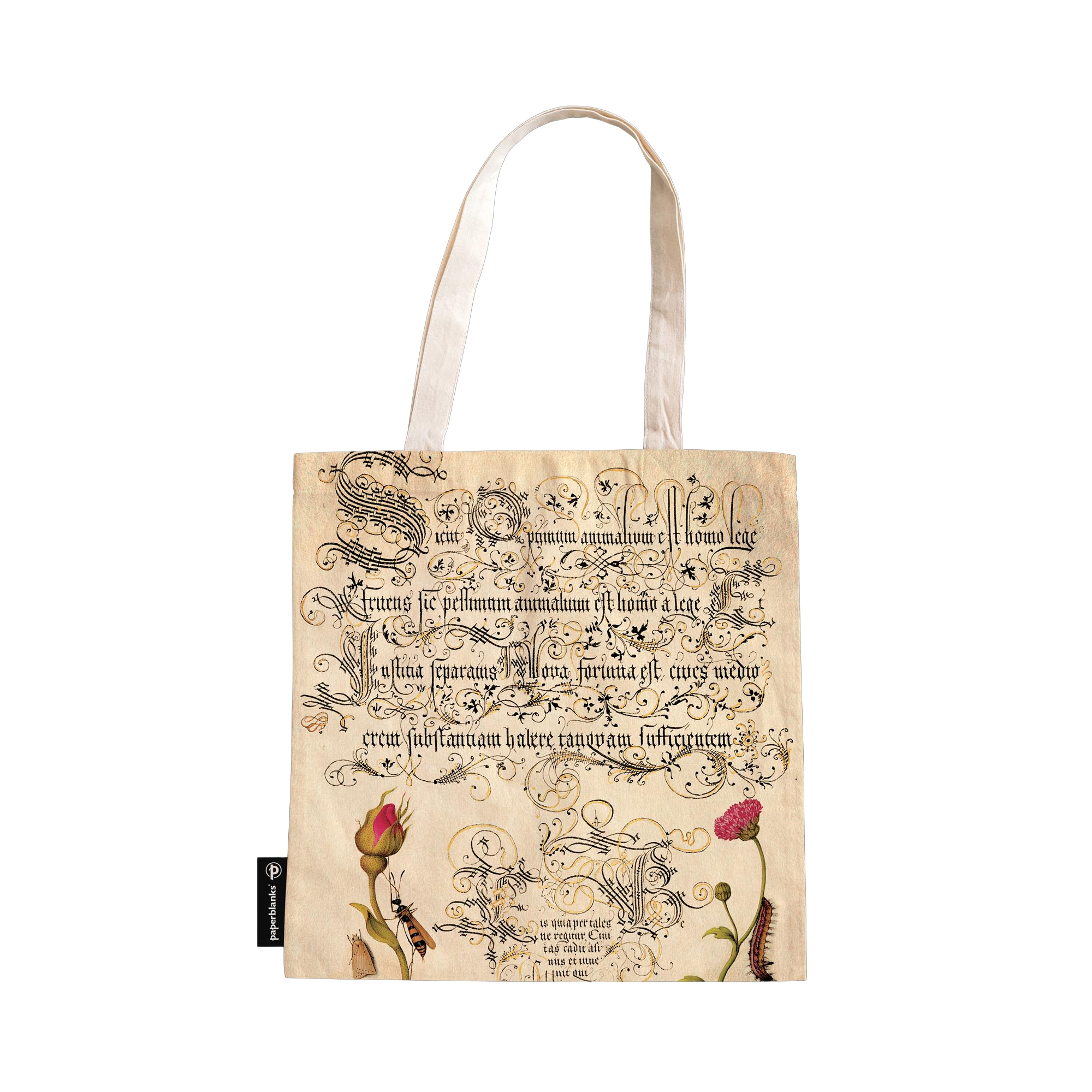
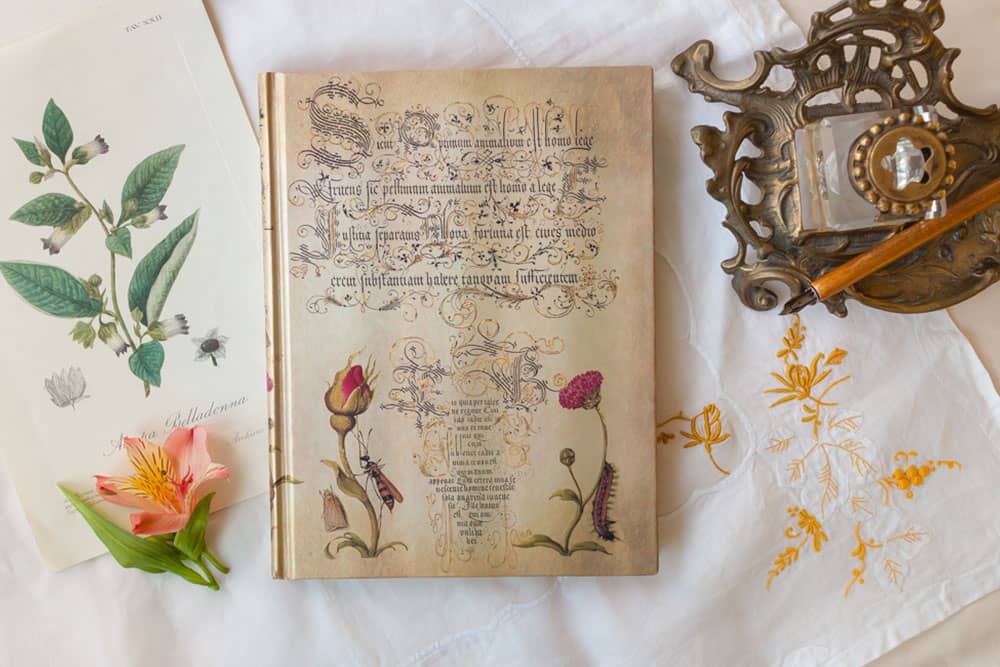
The specific piece from the Mira that we have reproduced here is known as Wainscot, French Rose, Wasplike Insect, English Daisy and Caterpillar, owing to the plants and insects most clearly depicted. The scientific naturalism of Hoefnagel’s botanical and animal drawings are what served as a model for future Netherlandish still life artists. Hoefnagel is remembered as being the last important Flemish manuscript illuminator and one of the first artists to work on the new genre of still life. In fact, one of his undated miniature floral pieces is regarded as the first known independent still life image.
The Mira calligraphiae monumenta (Model Book of Calligraphy) is celebrated as one of the last important examples of European manuscript illumination. With Bocskay and Hoefnagel, two masters of their field, at work, no one art form rises as superior. Instead, the calligraphy and illumination elevate each other. Today, the book can be found in the collections of the Getty Museum in California.