



Journals
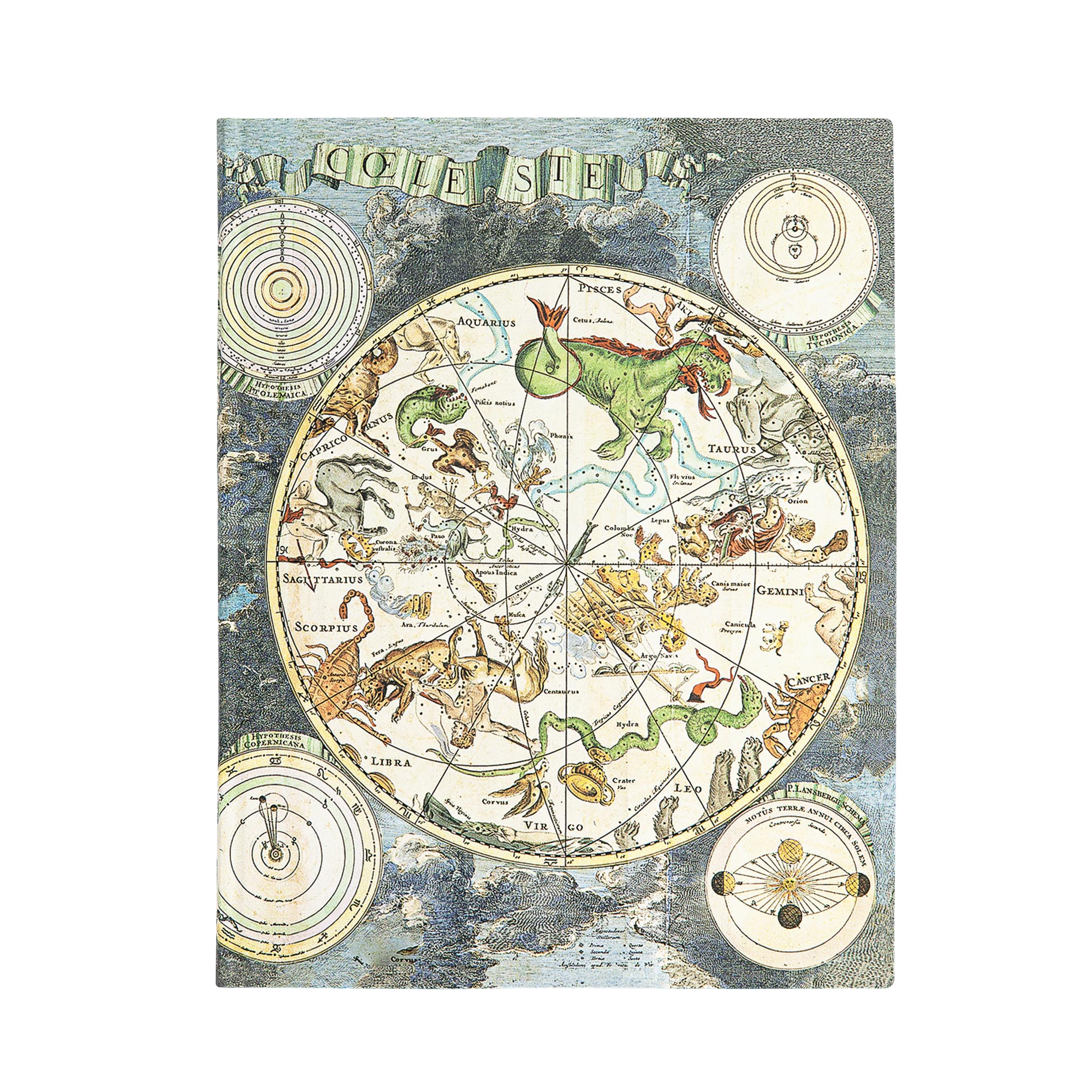
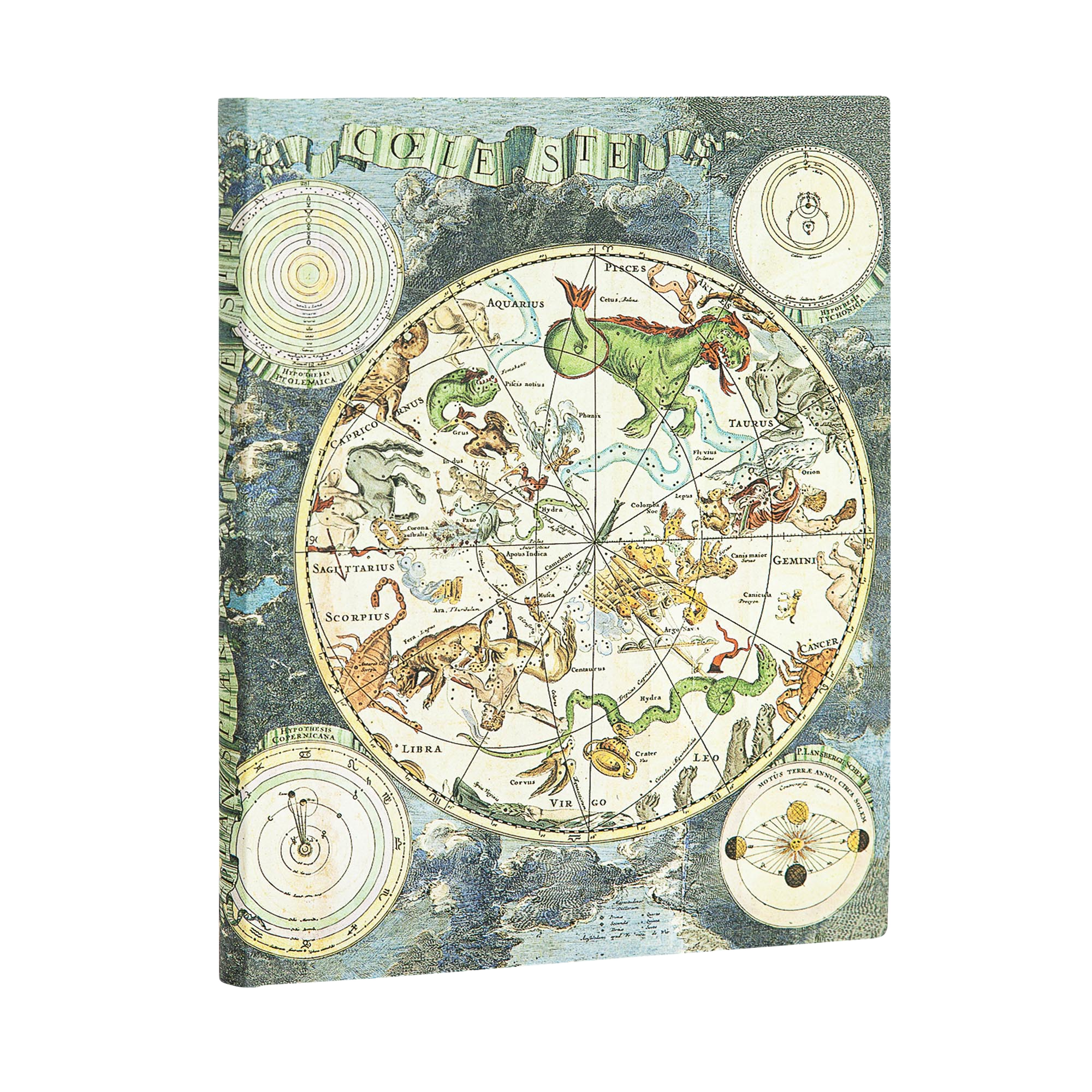
Celestial Planisphere
Early Cartography
Item no. 9781439756140
- Interior: Lined
- Closure: No Closure
- GSM (paper weight): 100 gsm
- Edge Printing: Yes
- Pouch Type: Back Cover Pouch
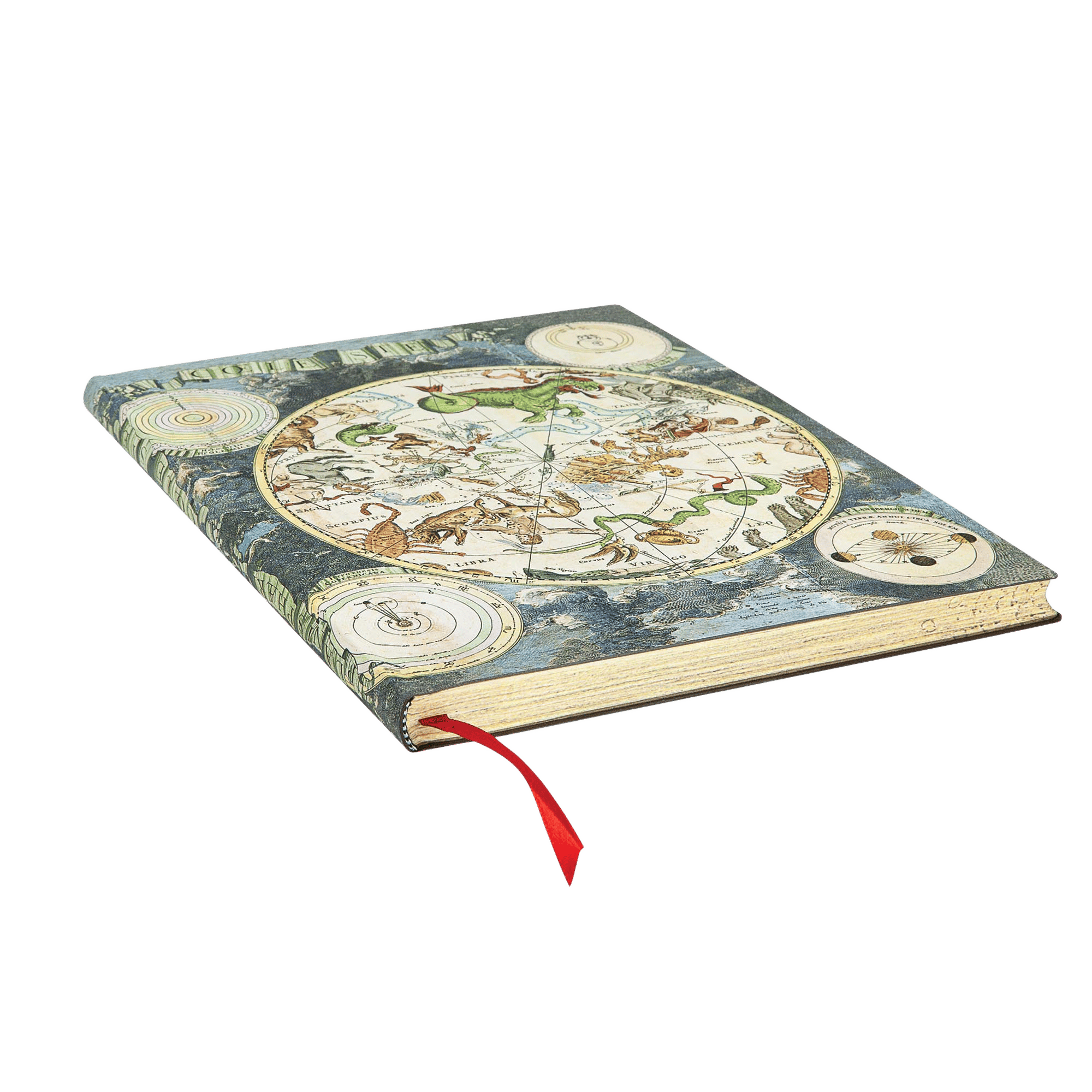
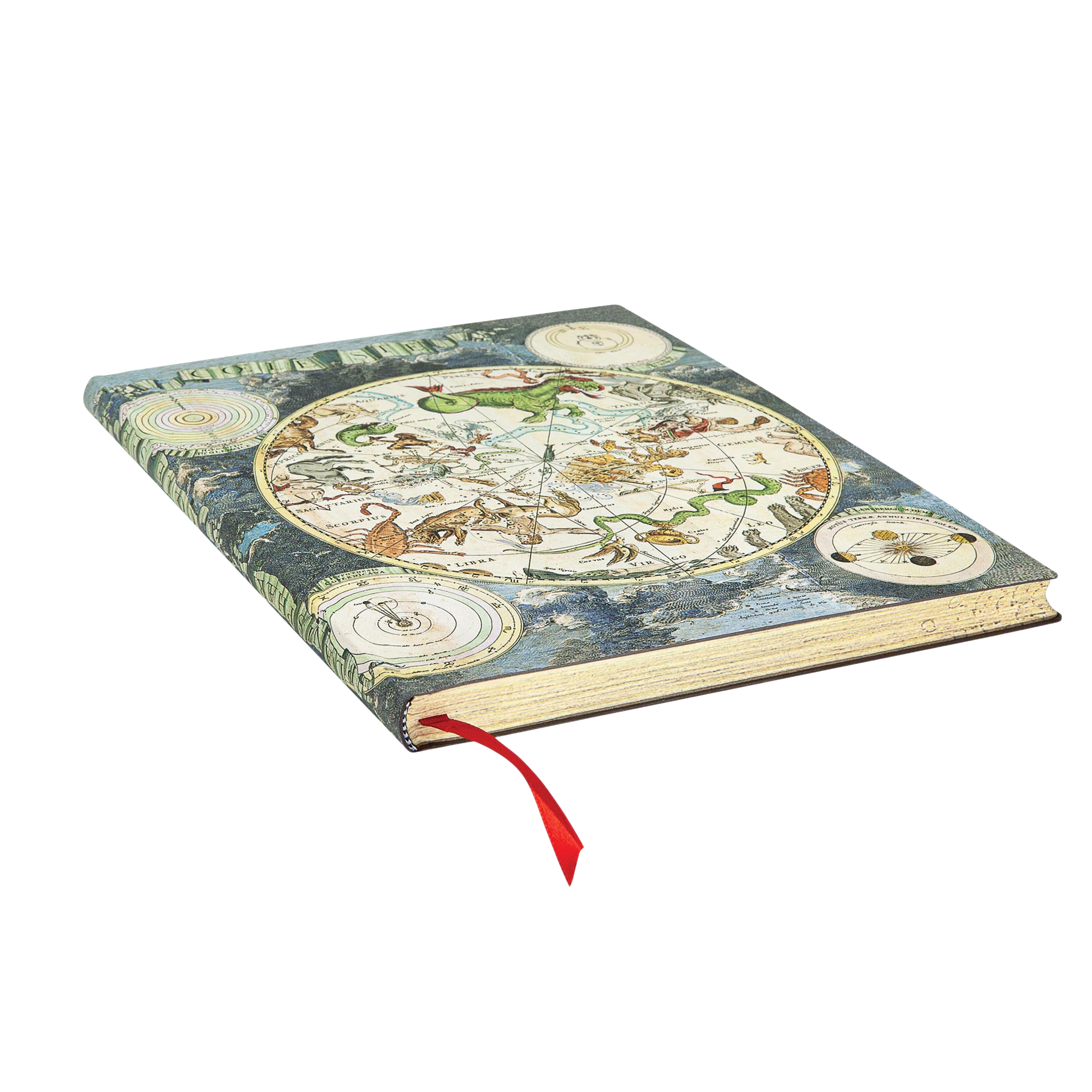
- Satin ribbon marker
- 100% recycled binder boards
- Decorative printed cover paper
- Endpaper with credit and copyright information as well as historical background for the original artwork
- Threaded stitching and glue, as needed
- Acid-free sustainable forest paper
- Memento pouch
Considering the environmental impacts of doing business is important to us. That's why all of our paper is derived from sustainable forest pulp, our binder boards are made with 100% recycled materials and our paper is printed on acid-free, sustainable forest paper.
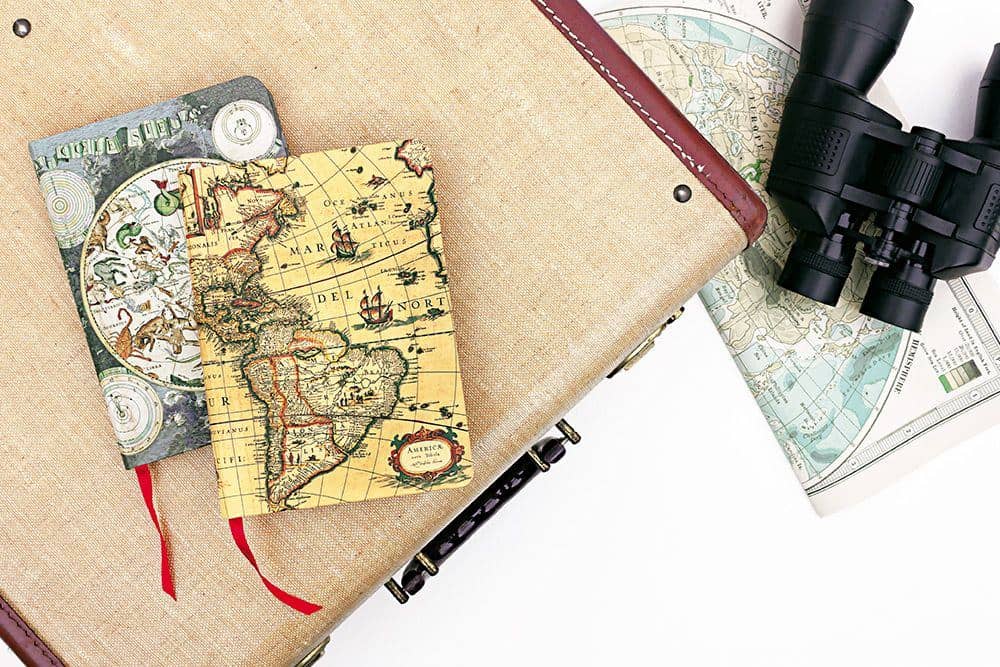
It has been more than 25 years since we began this Paperblanks journey celebrating all eras of human artistry. To commemorate our quarter-century milestone, we looked back to the early days of our history and selected one of our original series to be re-released as a new retrospective edition.
First introduced in 1994, the original Early Cartography series included reproductions of four spectacular maps produced in the Dutch Golden Age, a period of the Netherlands’ dominance in seafaring, trade, science, military and art. With this new Early Cartography release, we are bringing back into the spotlight the skill and imagination of those 17th-century Dutch cartographers.
During the 1600s, this region of Europe was experiencing a cultural and economic boom largely spurred on by the Dutch expansion overseas. Enthusiasm for geography was felt across the whole of Dutch society. In this environment, mapmaking took on a greater artistic and decorative character. Cartography was now not only a source of essential practical tools; it was also a form of art that fused together scientific knowledge, accurate representation, æsthetic appeal and an individual mapmaker’s creative expression. Distinguished artists, engravers, typographers and publishers put the cities of Antwerp and Amsterdam on the cartographic map.
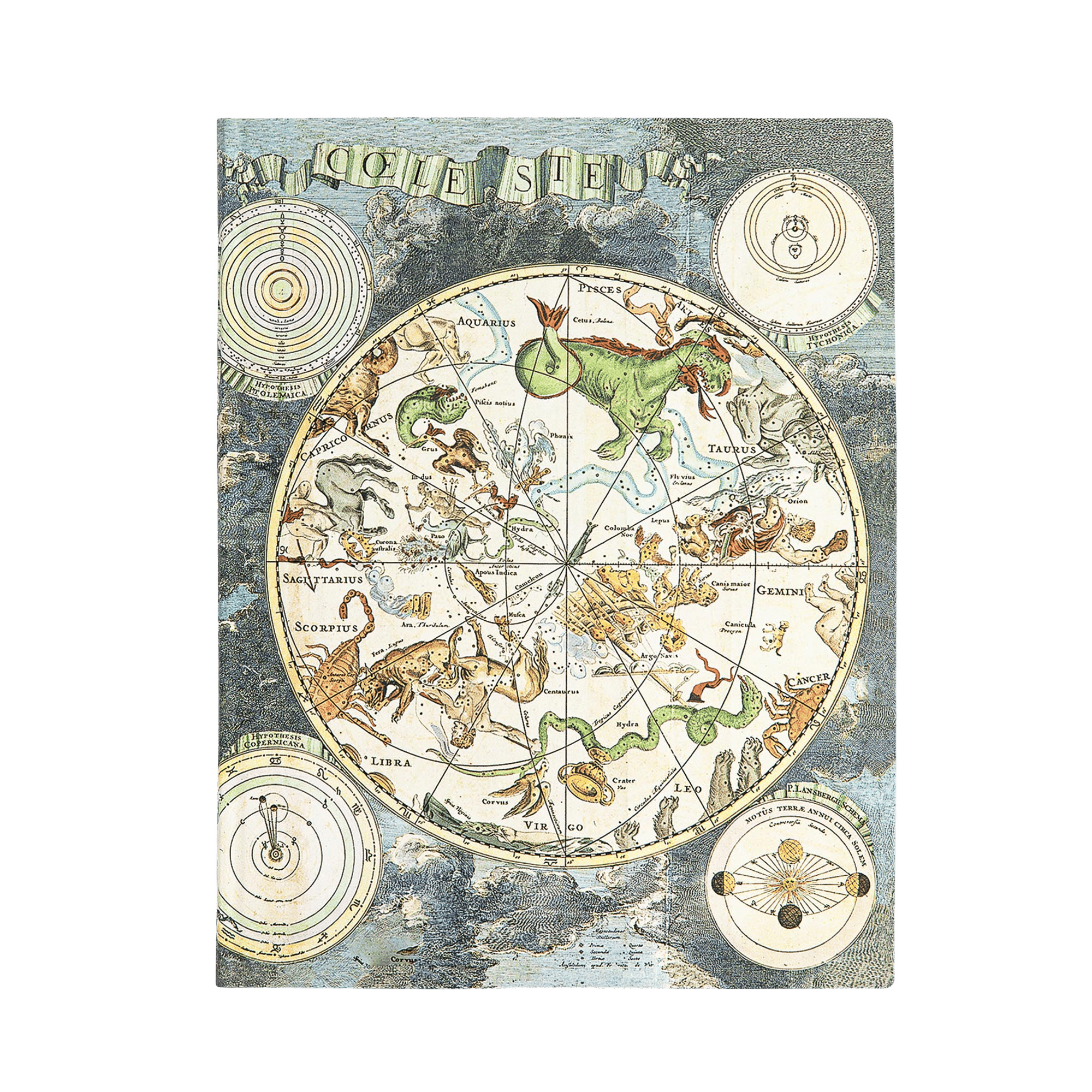
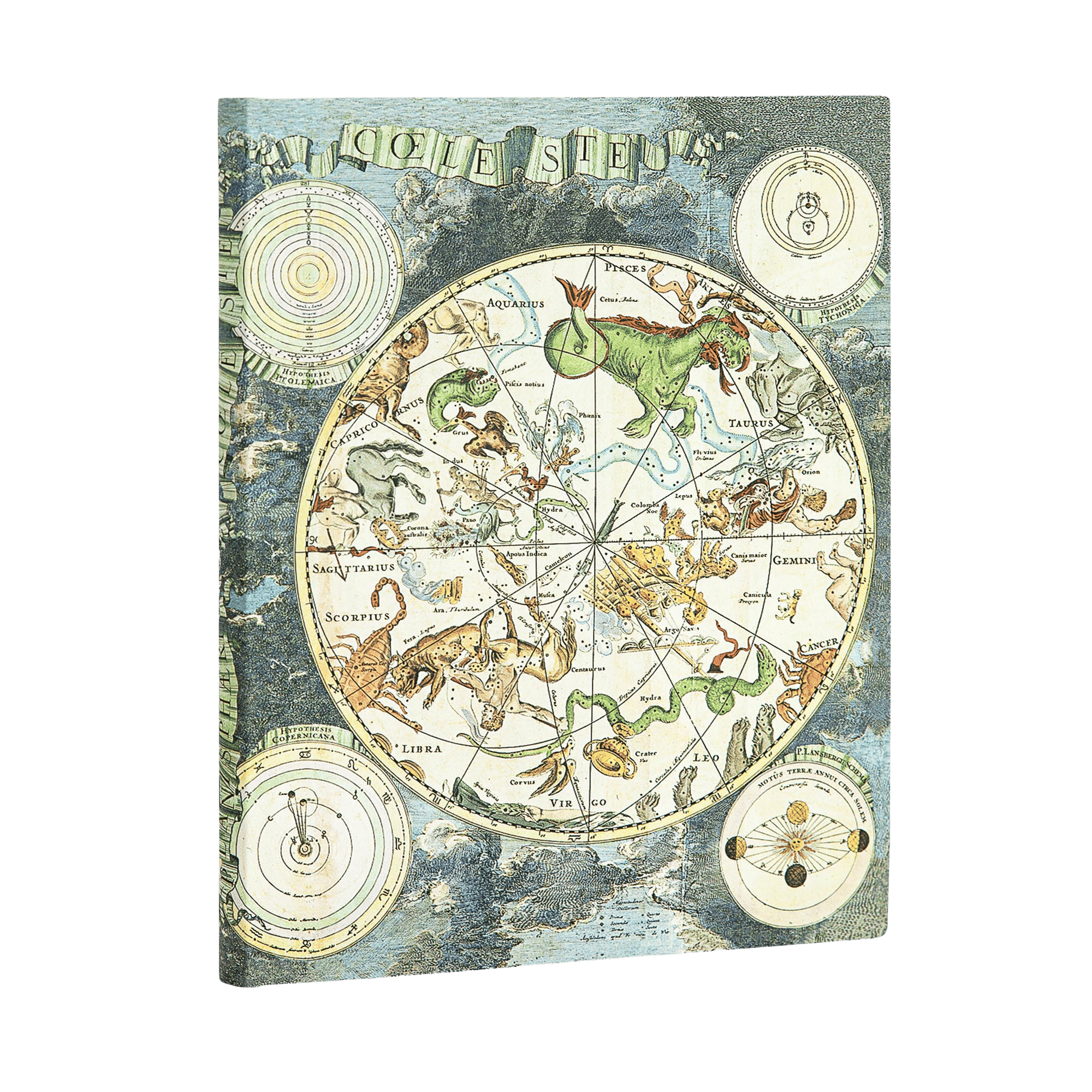
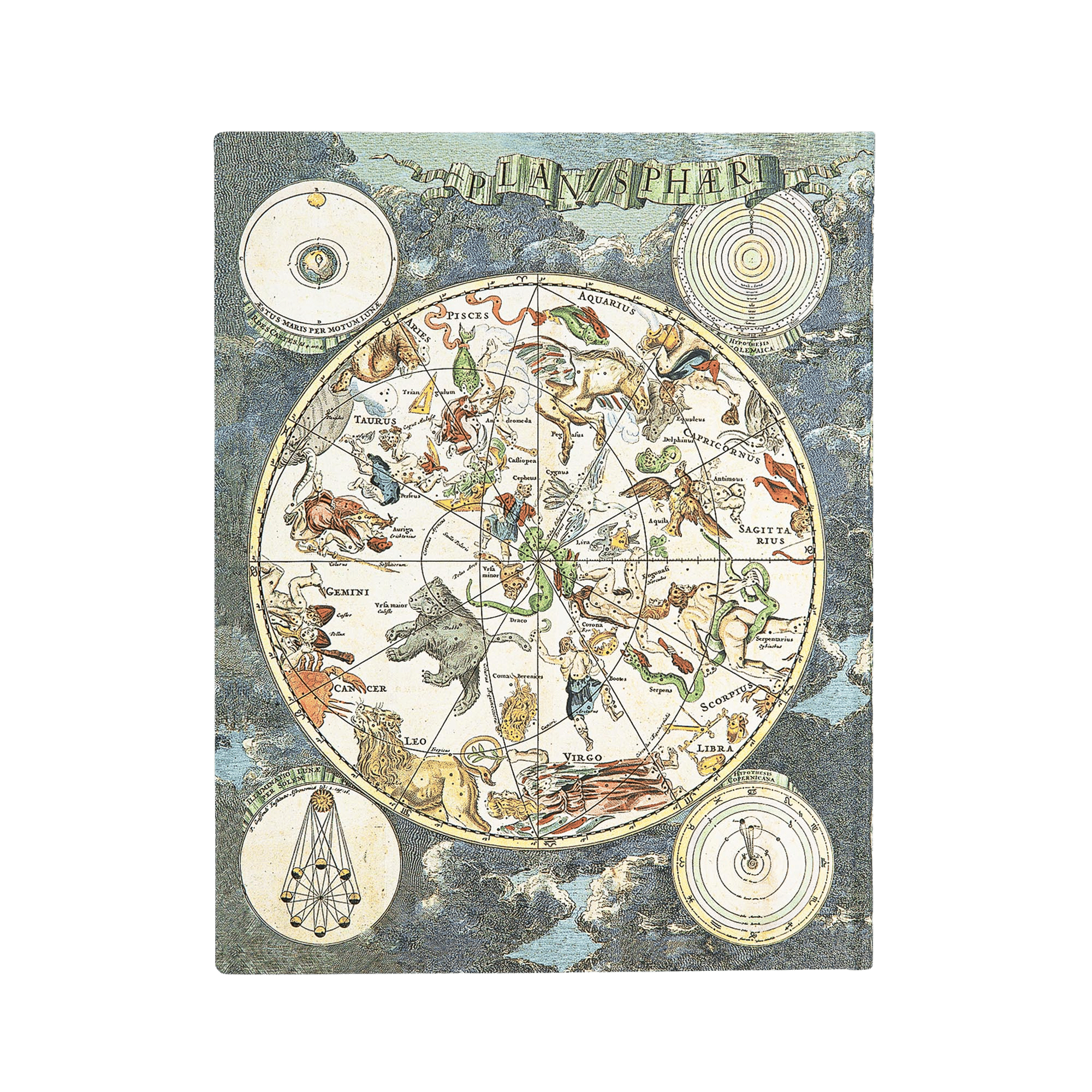
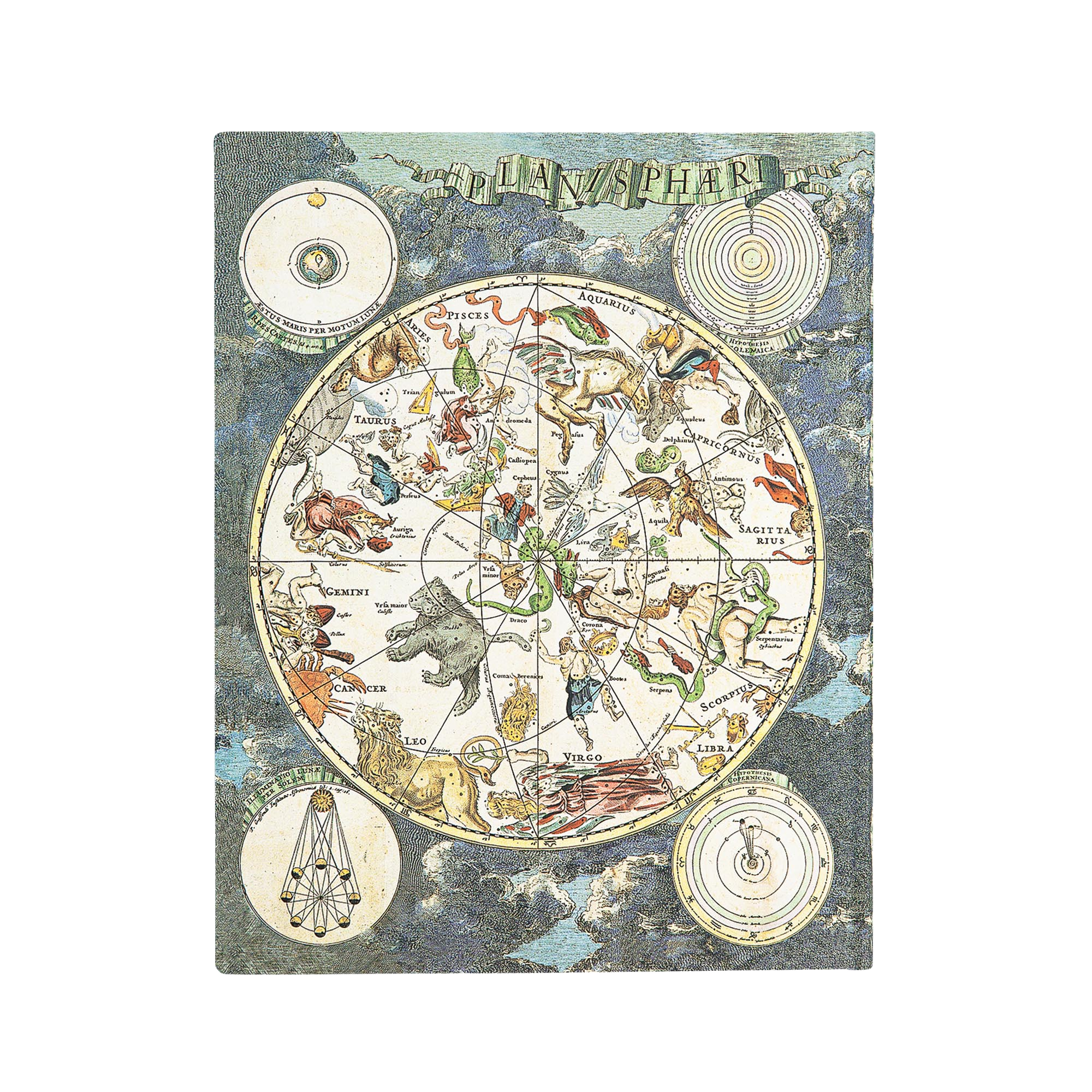
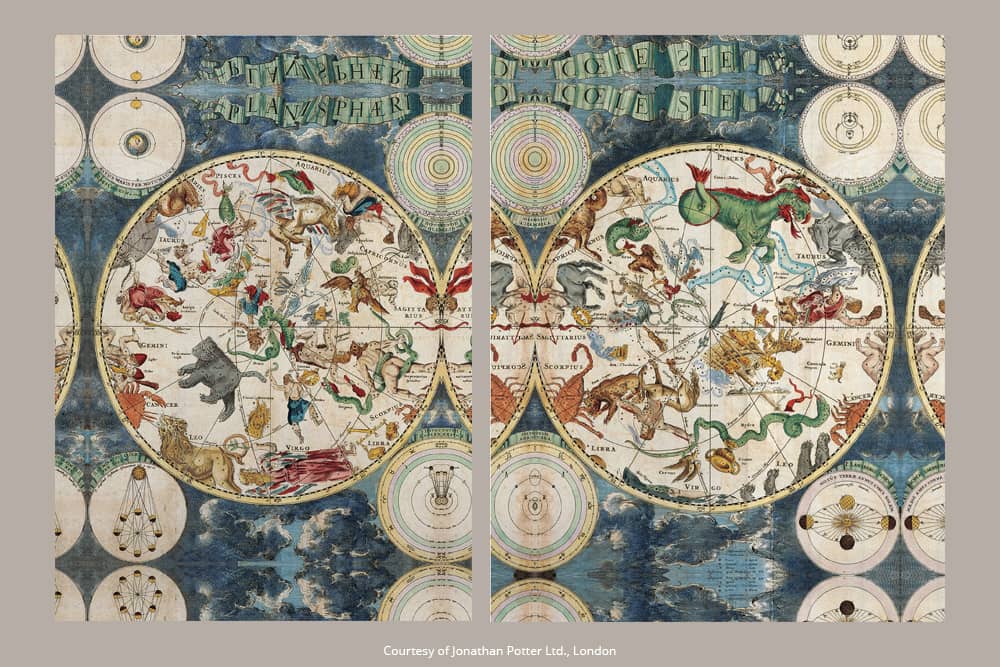
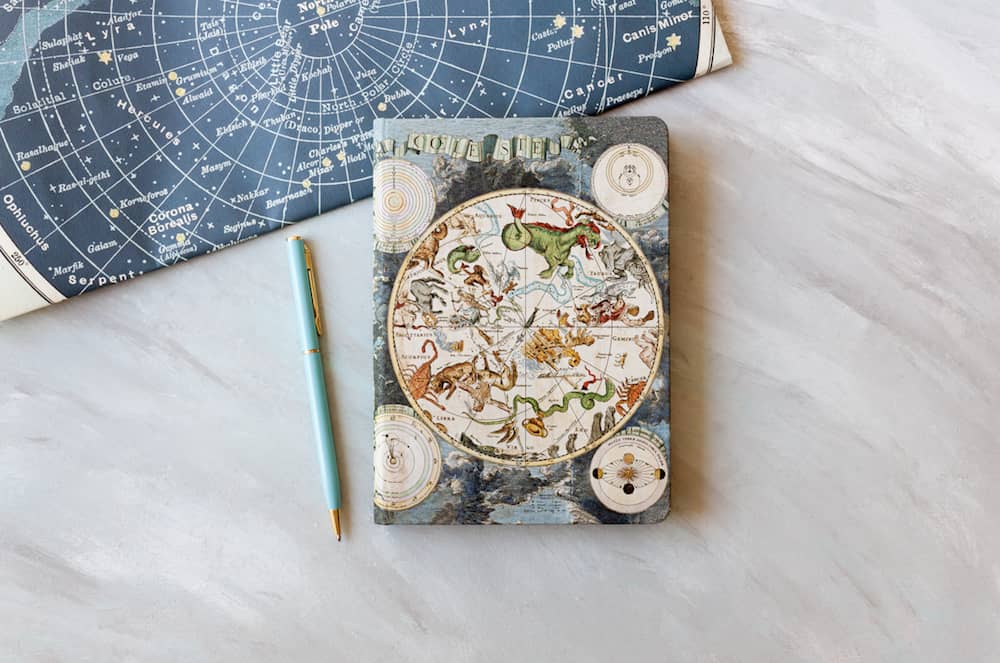
For our Celestial Planisphere cover design we have reproduced a star chart created by Frederik de Wit, a prolific engraver and publisher of the time. His maps had a distinct decorative flair which made them very popular with the public. Populated with fantastical creatures representing the zodiac signs, De Wit’s colourful sky map is an object of great beauty, but its importance went beyond æsthetic pleasures. In a time when seafarers and scientists depended on their ability to identify stars and their position in the sky, star charts were indispensable as navigational and scientific study tools. Also depicted on De Wit’s chart are six diagrams representing different conceptions of the universe, including the Copernican heliocentric theory that wasn’t widely accepted until much later.
During the Dutch Golden Age, the best cartographers succeeded in creating maps equally able to serve a useful function and please art lovers. Along the same lines, we at Paperblanks have always endeavoured to create products that are as useful as they are beautiful. This makes our Early Cartography series re-release a fitting closure to the string of celebrations commemorating our 25th anniversary year.
Need Help?
In case of any questions, check out our FAQs here. If you still can't find your answer, you can contact us at the link below.
Contact Us